Archives
now browsing by author
TWO EXTREMES CONCERNING THE HOLY SPIRIT

The SDA Trinitarians say that the Holy Spirit is a third divine being while the SDA non-Trinitarians say that the Holy Spirit is Jesus Himself. Both views are erroneous and extreme. The SDA pioneers had it right. They said that the Holy Spirit is God’s representative.
The language of John 14-16 speaks of someone whom Jesus would ask the Father to send. That Person would not speak of himself but would speak only what He hears and would bring back to the minds of the disciples the things that Jesus would have told them – “he shall not speak of himself; but whatsoever he shall hear, that shall he speak” (John 16:13).
There is no denying that the Comforter, the Holy Spirit, sent at Pentecost is a person – only not a God-being to be worshipped. Like the Angel of Revelation 18, the Comforter carries out a work of worldwide extent and is aided by other heavenly beings. Ellen G. White describing the latter rain speaks of a mighty angel from heaven being sent to do this work and further said, “Angels were sent to aid the mighty angel from heaven” (Ellen. G. White, Story of Redemption, p. 399).
The three powers of heaven are God, Christ, and holy spirits (angels). There are many such references; for example: “I charge thee before God, and the Lord Jesus Christ, and the elect angels, that thou observe these things” (1 Tim. 5:21). These are the same ones who were present at the creation – “Where wast thou when I laid the foundations of the earth? …. When the morning stars sang together, and all the sons of God shouted for joy?” (Job 38:4-7). Again, “Grace be unto you, and peace, from him which is, and which was, and which is to come; and from the seven Spirits which are before his throne; And from Jesus Christ” (Rev.1:4, 5). These seven spirits are later described as “seven lamps of fire” (Rev. 4:5) and as “the seven angels which stood before God” (Rev. 8:2).
This is consistent with the Hebrew word ruach, used for “spirit” in the Old Testament and the Greek word pneuma, used for “spirit” or “Ghost” in the New Testament. These words are also translated as “spirits”, thus indicating that the Holy Spirit need not be seen as one individual being who is omnipresent but many spirit beings representing God everywhere.
There is a sense in which the term spirit refers to a person’s mind. In that sense, the spirit of Christ is the mind of Christ, but that is a different usage from references to the person called the Comforter. The Comforter speaks, can be grieved, was sent by Christ etc. signifying that he is a person separate from Christ, but not a God-being to be worshipped.
“He that hath ears to hear, let him hear” (Matt. 11:15).
For further information, please visit Patience of the Saints at http://thecommandmentsofgodandthefaithofjesus.com
AN ELIJAH MOUNT CARMEL CHALLENGE

Does the Bible say that the one true God is three persons? If so, where? This is a challenge to the church to put forward its best scholars with its best arguments to show from the scriptures that the one true God is three persons.
The best of Roman Catholic scholarship declares that the doctrine of the Trinity – namely, that the one God is three persons – is not specifically taught in the scriptures, but rather assumed. They claim the authority to declare doctrines that are not specifically taught in the Bible. But what do Seventh-day Adventists have to say, who claim sola scriptura – the Bible alone – as their rule of faith and practice?
Rome once derided Protestants for keeping Sunday, while claiming sola scriptura, because they declared that Sunday worship derived its legitimacy from Rome and not the Bible. At that time, they said that Seventh-day Adventists were the only consistent ones, but that they were small and insignificant. At that time Seventh-day Adventists did not declare belief in a Trinity. Now that Seventh-day Adventism has grown and can no longer be ignored, and have since declared belief in the Trinity as a Fundamental Belief, will Rome deride us for believing in a Trinity while claiming sola scriptura?
My challenge is for the church to come to grips with itself before it faces the onslaught of others outside.
TRINITARIANS NEED TO ANSWER ONE SIMPLE QUESTION: DOES THE BIBLE SAY THAT THE ONE TRUE GOD IS THREE PERSONS? IF SO, WHERE?
A godly response to the concern raised will suffice.
Many persons have confused nature with identity. So, they will tell you that the Father is God, the Son is God and the Holy Spirit is divine; but there is only one God, so the one God must be the three. But being God (by nature) is not the same as being designated or identified as the “only true God” or the “one God”, which has to do with identity, position and authority.
It is like being a man as opposed to being a specific man. One might be a man but not the man. When Pilate pointed to Jesus and said, “Behold the man” (John 19:5), he was not referring just to any man, but to a specific man, namely, Jesus. In a similar way, the Bible says, “For though there be that are called gods, whether in heaven or in earth, (as there be gods many, and lords many,) But to us there is but one God, the Father of whom are all things, and we in him; and one Lord Jesus Christ, by whom are all things, and we by him.” (1 Cor. 8:5-6).
There we have it: there is one God, the Father, and one Lord, who is the Christ – two distinct individuals: God and Christ. The Christ is the one sent by God, and not God himself. Jesus Christ himself identified both, when He prayed to His Father in heaven. He said, “And this is life eternal, that they might know thee the only true God, and Jesus Christ, whom thou hast sent.” (John 17:3).
Yes, the Holy Spirit is a person – he speaks, he can be grieved etc. But the Father is greater than the Son because the Father sends the Son; and the Son is greater than the Holy Spirit because the Son sends the Holy Spirit (John 15:26; 16:7).
The one God (one supreme Being) of the Bible is Jesus’s Father – “For this cause I bow my knees unto the Father of our Lord Jesus Christ, of whom the whole family in heaven and earth is named” (Eph. 3:14, 15). The Father has no co-equals. He is “the blessed and only Potentate, the King of kings, and Lord of lords; Who only hath immortality, dwelling in the light which no man can approach unto; whom no man hath seen, nor can see” (1 Tim. 6:15, 16). There aren’t three supreme beings, only One. All other beings are subject to Him.
IT IS TIME TO REPENT! WE HAVE FAILED TO RECOGNIZE AND WORSHIP GOD FOR WHO HE IS.
“God is one” (Deut.6:4) – not three.
There is “One God and Father of all, who is above all” (Eph.4:6).
He is “the God and Father of our Lord Jesus Christ” (Eph.1:3; 2 Cor. 11:31; I Pet. 1:3).
The issue is not that Jesus is not God. Jesus is God by nature – same nature and character as His Father. But Jesus has a God who begot Him (John 1:14). Jesus has a God who anoints Him (Heb.1:9). Jesus has a God who appoints Him (Heb. 1:2). Jesus has a God who sends Him (John 17:18). Jesus has a God whose will He does (John 6:38). Jesus has a God who reveals things to Him (John 5:20). Jesus has a God who gives Him power (1 Cor. 15:27).
There is concern that Jesus is being diminished. Really? It is the Father who is being diminished. He dwells in light that no man can approach unto (1 Tim. 6:16). No one anoints Him. No one appoints Him. No one sends Him. No one reveals anything to Him. No one instructs Him (Isa. 40:13). He does the will of no one but His own will. No one gives Him power. He can swear by none greater than Himself (Heb. 6:13). It is His name that the saved will have written in their foreheads (Rev. 14:1). The entire family in heaven and in earth is named after Him (Eph. 3:15).
We are commanded to worship God and Christ. But if we make Christ to be God himself, then what becomes of God himself? He is overlooked or forgotten! This is the idolatry of the present age – we worship the Holy Spirit as God and worship Jesus Christ as God but overlook the “only true God” to whom Jesus prayed (John 17:3). We come to the Father, the one Supreme Being, the “only true God” through Christ, His only begotten Son – “For there is one God, and one mediator between God and men, the man Christ Jesus” (1 Tim. 2:5). It is for this reason we pray to the Father in Jesus name.
WHO IS JESUS?
The question, “Who is Jesus?” is about identity – not nature. It is clear from the Bible that Jesus was not merely a man. He existed before being born as a human being. He is God, by nature; that is, He is a divine being. But who is He?
There is none with greater authority to declare this than God Himself. What did God declare? God spoke directly from heaven, and the Biblical record is as follows: “For he received from God the Father honour and glory, when there came such a voice to him from the excellent glory, This is my beloved Son, in whom I am well pleased.” (2 Pet. 1:17).
Jesus Himself agreed with the Father’s declaration concerning Him when He spoke with Peter, in the following conversation: “He saith unto them, But whom say ye that I am? And Simon Peter answered and said, Thou art the Christ, the Son of the living God. And Jesus answered and said unto him, Blessed art thou, Simon Barjona: for flesh and blood hath not revealed it unto thee, but my Father which is in heaven.” (Matt. 16:15-17).
The Jesus of the Bible is the Christ, the son of God, not God himself. The Bible speaks of God and Christ. Even Jesus Himself declared this in His prayer as follows: “And this is life eternal, that they might know thee the only true God, and Jesus Christ, whom thou hast sent.” (John 17:3). If we make Christ to be God Himself then what becomes of God Himself? He becomes non-existent. It is a false Christ that is represented as God Himself. God is the father of Christ.
May the Lord help us to repent before it is too late.
“He that hath ears to hear, let him hear” (Matt. 11:15).
For further information, please visit Patience of the Saints at http://thecommandmentsofgodandthefaithofjesus.com/
Questions and comments may be sent by e-mail to: commandmentsofgodandfaithofjesus@yahoo.com
IS THE ONE GOD, FATHER, SON AND HOLY SPIRIT?

Almost every Christian church teaches that there is one God, who is Father, Son and Holy Spirit. They have various explanations as to how the three make up the one God. The question is, does the Bible say that the one God is Father, Son and Holy Spirit?
Many theologians, scholars and church leaders insist that in order to be regarded as Christian, one must accept this teaching. Yet, strangely, they are unable to show even one place in the Bible where anyone has ever stated this most basic concept on which their faith and religion rest.
Catholics are at least honest enough to state explicitly that their faith is not based on the Bible alone. But what do the others say, who claim sola scriptura – the Bible alone – as their basis of faith? Have they all quietly become Catholic, but unable to admit it? This concept is what originally defined who is Catholic, as was decreed by three reigning emperors of Rome in the Edict of Thessalonica, 380 AD. The decree was as follows:
“let us believe in the one deity of the Father, the Son and the Holy Spirit, in equal majesty and in a holy Trinity. We authorize the followers of this law to assume the title of Catholic Christians; but as for the others, since, in our judgment they are foolish madmen, we decree that they shall be branded with the ignominious name of heretics” (Edict of Thessalonica issued 380 AD).
Belief in the one God who was considered to be Father, Son and Holy Spirit was a requirement under Roman law and to believe otherwise was punishable under Roman law. Many otherwise faithful Christians were prosecuted and executed by civil authorities simply because they were unable to declare belief in a God that the Bible did not teach.
So, the question is simply being raised here, does the Bible teach that the one God is Father, Son and Holy Spirit? Those church leaders who are asking their members to declare such a belief should ask themselves whether they can, at minimum, show that this is explicitly stated anywhere in the Bible. If they cannot, in all honesty, they should further ask themselves, whether they are promoting a false God.
“He that hath ears to hear, let him hear” (Matt. 11:15).
For further information, please visit Patience of the Saints at http://thecommandmentsofgodandthefaithofjesus.com/
Questions and comments may be sent by e-mail to: commandmentsofgodandfaithofjesus@yahoo.com
WHO IS JESUS?
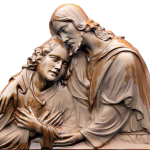
The question, “Who is Jesus?” is about identity – not nature. It is clear from the Bible that Jesus was not merely a man. He existed before being born as a human being. He is God, by nature; that is, He is a divine being. But who is He?
There is none with greater authority to declare this than God Himself. What did God declare? God spoke directly from heaven, and the Biblical record is as follows: “For he received from God the Father honour and glory, when there came such a voice to him from the excellent glory, This is my beloved Son, in whom I am well pleased.” (2 Pet. 1:17).
Jesus Himself agreed with the Father’s declaration concerning Him when He spoke with Peter, in the following conversation: “He saith unto them, But whom say ye that I am? And Simon Peter answered and said, Thou art the Christ, the Son of the living God. And Jesus answered and said unto him, Blessed art thou, Simon Barjona: for flesh and blood hath not revealed it unto thee, but my Father which is in heaven.” (Matt. 16:15-17).
The Jesus of the Bible is the Christ, the son of God, not God himself. The Bible speaks of God and Christ. Even Jesus Himself declared this in His prayer as follows: “And this is life eternal, that they might know thee the only true God, and Jesus Christ, whom thou hast sent.” (John 17:3). If we make Christ to be God Himself then what becomes of God Himself? He becomes non-existent. It is a false Christ that is represented as God Himself. God is the father of Christ.
“He that hath ears to hear, let him hear” (Matt. 11:15).
For further information, please visit Patience of the Saints at http://thecommandmentsofgodandthefaithofjesus.com/
Questions and comments may be sent by e-mail to: commandmentsofgodandfaithofjesus@yahoo.com
Understanding the Gospel

What exactly is the Gospel? The word ‘gospel’ means good news. The Gospel is the good news about salvation, and salvation comes to us through Jesus Christ.
But what is salvation? In a general sense, salvation is deliverance from danger or difficulty. It comes from the word ‘save’. It may also be seen as preservation from destruction or failure (Merriam-Webster Dictionary).
So, then, what are we being saved from? If, for example, someone is caught in a fire and that person is to be rescued from the fire, there is a certain urgency that is associated with the act or process of saving the person. In the case of the good news of salvation, what are we being saved from? If we don’t understand what we are being saved from, we won’t be able to appreciate the good news that is in it, neither will we share it with any conviction.
 In order to understand what we are talking about here, without the obfuscation that is often associated with some of the popular terms that people use, that lend themselves to multiple interpretations, we’ll simply ask some questions and see what the simple answers are from the Bible, giving the appropriate references.
Consider John the Baptist, Christ and the Apostles:
1. Who was John the Baptist? John the Baptist was the greatest prophet (Luke 7:28).
2. What did he do? He preached repentance and pointed to Jesus as the saviour (Luke 3:3,4; John 1:29-34).
3. Did John do miracles? No (John 10:41). Did he speak truth about Jesus? Yes (John 10:41).
4. Did John have the Holy Spirit? Yes (Luke 1:15).
5. What are we being saved from? Sin (Matt. 1:21).
6. What is sin? Sin is disobedience to God (1 John 3:4).
7. How many types of sin exist? There are two types of sin: rebellious (presumptuous) and naive (ignorant) – 1 John 5:16; Num. 15:24-31; Heb. 10:26; 1 John 2:1).
8. What type of sin was Satan’s? Satan’s sin was rebellious (Rev. 12:7-9).
9. What type of sin was Eve’s? Eve’s sin was naive – she was deceived (1 Tim. 2:14).
10. Concerning whom was the promise of redemption when it was first given? Eve and her offspring (Gen. 3:15).
11. What is required of us and why? Believe the testimony of Jesus and repent (Acts 16:31; 2:38, 39; Rom. 4:3).
12. What was Jesus’s testimony about? The testimony of Jesus was about God, His Father (John 1:18; 17:3-8; 18:37).
13. Did Jesus reveal anything else? Yes, the truth about principalities and powers – Satan and his host (Col. 2:15).
14. What did Christ reveal about Satan and His host? That they are liars and murderers (John 8:44; Acts 2:23).
15. What does that revelation result in? Christ triumphing over Satan and his host by exposing them (Col. 2:15).
16. Through what does Christ destroy the Devil? Through His death (Heb. 2:14).
17. What else does Christ’s death accomplish? Our release from bondage and our redemption (Heb. 2:15; Rev. 5:9).
18. What kept us in bondage? Fear of death (Heb. 2:15).
19. Who had the power of death? Satan (Heb. 2:14).
20. What casts out fear? Love (1 John 4:18).
21. Who is love? God (1 John 4:8).
22. Why do we love God? Because He first loved us (1 John 4:19).
23. How do we know that God loves us? Because He sent His only begotten Son into the world (1 John 4:9; Rom. 8:32).
24. So how are we saved? By knowing God and believing the truth about Him as Jesus manifested (John 17:3-8).
25. How are we going to know the truth about God and Christ? Someone has to tell us (Rom. 10:13, 14).
25. Were there eyewitnesses who gave firsthand testimony about Christ? Yes, His disciples and the prophets (2 Pet. 1:16-21).
27. So what did Christ call upon His disciples to do? Go and teach all nations to observe whatsoever He has commanded and to be witnesses concerning Him (Matt. 28:19, 20; Acts 1:18).
28. What will we do if we love Him? Keep His commandments (John 14:15, 21; 15:10; 1 John 5:2, 3; 2 John 1:6).
29. How are we changed? By beholding Christ (2 Cor. 3:18).
30. How did sin start on earth? Eve was deceived and got her husband, Adam, to join her in disobedience to God (1 Tim. 2:14).
31. What was the first step? She took her focus away from God – going to where the serpent was and talking to the serpent (Gen. 3:1-5).
32. What was the second step? She believed the serpent’s lie – about God (Gen. 3:6).
33. What was the third step? Disobedience to God – which is sin (Gen. 3:6; 2:16, 17).
34. What is the reverse that is involved in the redemption process? Transformation by renewing of the mind (Rom. 12:2).
35. How are we drawn back to God? By beholding Christ and believing in Him (2. Cor. 3:18; John 3:14, 15; 12:32).
36. What about Him do we need to believe? That He is the Son of God, that God sent Him, that He is manifesting the Father’s character and that His testimony or witness is true – about God (John 11:42; 12:44-50; 16:27; 17:8; 18:37).
37. To what end does Christ seek to have us believe on Him? That we might be reconciled to God in our hearts and will obey God – keep His commandments (John 1:12; 12:50; Matt. 19:17; Matt. 5:19; Matt. 15:3, 6-9; Rev. 22:14).
38. How are we able to keep God’s commandments? He gives us the power to keep them (Phil. 2:13; Titus 2:11, 12; John 1:12) – it is He that worketh in you both to will and to do of His good pleasure.
39. What does God have in store for those who obey Him? Everlasting life and paradise restored (Rom. 6:22; Rev. 22:14).
40. And what else is in store, most critically? A restored relationship and fellowship with God and Christ, the heavenly beings and the host of the redeemed (Rev. 21:22-27).
Look away from self and look to God through Christ – the mediator. You will be drawn to love God and others; by repentance you demonstrate that you are not rebellious but only previously duped by Satan; Christ will advocate for you and give you what you need.
Christ came to reveal the Father and expose the Devil in order to win us back to the Father and break the Devil’s hold over us that has existed because of our belief in the Devil’s lies about God.
The truth to believe is that God is good, means us well, knows what is good for us and we should believe, accept and follow everything He says. The Devil is a liar and a murderer and should be rejected.
Christ, the only begotten Son of God, who is exactly like God, His Father, in character, is the perfect manifestation and proof, in His life on earth, of God’s character.
By yielding himself to be killed by wicked hands, Christ has exposed Satan and his followers as liars and murderers whose words should be completely rejected and whose company should be shunned, thereby releasing us from Satan’s captivity in which we were held through our belief in Satan’s lies about God.
Even now Satan still holds many people captive under his deception by causing them to believe a distorted version of the gospel that still maligns God. They believe that Christ died in order to pay a price that God demanded before He would forgive us.
The truth is that the death of His Son was the price that God had to pay in order to save us. That is what it costed God to provide the basis whereby Satan’s hold on us might be broken.
Having revealed the true character of God, His Father, through the life that He lived on earth, and having discredited Satan by exposing him as a liar and a murderer, Christ now invites us to believe the truth and be saved (Acts 16:31; Rom 4:3; John 17:3). Otherwise, we’ll believe the Devil’s lies and be damned (2 Thess. 2:10-12).
It is all about relationship. That is why the Bible likens the relationship between husband and wife to that between Christ and His church. It is all about love. Righteousness is love to God first and foremost, which also leads us to love others as we love ourselves.
Sin is love of self first, which leads to lack of appreciation of others and ultimately to enmity against God and to the practice of every form of wickedness.
Nobody can love for us. We must love for ourselves. People talk about receiving the righteousness of Christ as though a righteous life is something that Christ does for us and simply gives us. Christ’s love cannot stand in place of the love that we ourselves must have and exercise.
What Christ does for us is to accept us and extend His love to us. It is entirely up to us to respond to His love by loving Him in return.
The capacity to love is something that God made all of His creatures with. It is only a question of who or what we choose to love supremely – whether God or self.
This is determined by whether we look at God as manifested in Christ, so that, in beholding we become changed or we look constantly at self so that everything for us revolves around self.
The root of the matter is all about relationship – love to God supremely and love for others as we love ourselves (Matt. 22:37-40). This is what righteousness is.
If we believe the Devil’s lies about God we cannot love Him.
Even with the clearest evidences of God’s love for us and God’s true character, Satan still tries to distort the truth about God. Some of the distortions are:
(i) The idea of an eternally burning hell
(ii) the idea that God required a blood sacrifice, the death of His Son, before He would forgive (that’s not what the death of Christ was all about – it was the sacrifice that God made, not what He required).
In the final analysis: believe the truth and be saved or believe a lie and be damned (2 Thess. 2:10-12; Luke 8:11, 12).
What then must be our mission? Accept and preach the gospel as John the Baptist did, as Christ did, as the apostles did and as Jesus has commanded us. The gospel is a message to repent and believe God (Mark 1:2-4, 14, 15; Acts 2:38; Matt. 28:19, 20; Rom. 4:3).
What will happen when our mission is fulfilled? The end will come (Matt. 24:14).
May the Lord help us.
“Remember ye the law of Moses my servant, which I commanded unto him in Horeb for all Israel, with the statutes and judgments. Behold, I will send you Elijah the prophet before the coming of the great and dreadful day of the Lord: And he shall turn the heart of the fathers to the children, and the heart of the children to their fathers, lest I come and smite the earth with a curse.” (Mal. 4:4-6)
“And he shall go before him in the spirit and power of Elijah, to turn the hearts of the fathers to the children, and the disobedient to the wisdom of the just; to make ready a people prepared for the Lord” (Luke 1:17).
“He that hath ears to hear, let him hear” (Matt. 11:15).
For further information:
E-mail: commandmentsofgodandfaithofjesus@yahoo.com
Two Types of Sin and How Salvation Relates

“If any man see his brother sin a sin which is not unto death, he shall ask, and he shall give him life for them that sin not unto death. There is a sin unto death: I do not say that he shall pray for it. All unrighteousness is sin: and there is a sin not unto death.” (1 John 5:16, 17).
It is generally known that the gospel is about salvation from sin. A critical element to understanding exactly what this means is the largely ignored fact that all sin is not of the same nature and that broadly speaking there are two categories of sin, both of which are treated differently in the plan of salvation. In speaking about the gospel, salvation and sin, some of these expressions have become so generalized and clichéd that people do not understand exactly what is involved. The result is that their thoughts on these matters are unclear and superficial and do not lend themselves to any kind of conviction that they would be willing to lay down their lives for. In this presentation, the objective is to seek to bring clarity so as to strengthen conviction.
The last-days prophet Ellen G. White explains that the two types of sin are exemplified by the sins of Lucifer and Adam respectively. She says:
“But even as a sinner, man was in a different position from that of Satan. Lucifer in heaven had sinned in the light of God’s glory. To him as to no other created being was given a revelation of God’s love. Understanding the character of God, knowing His goodness, Satan chose to follow his own selfish, independent will. The choice was final. There was no more that God could do to save him. But man was deceived; his mind was darkened by Satan’s sophistry. The height and depth of the love of God he did not know. For him there was hope in a knowledge of God’s love. By beholding His character he might be drawn back to God.” (Ellen G. White, The Desire of Ages, pp. 761, 762.)
She explains also:
“There was nothing poisonous in the fruit itself, and the sin was not merely in yielding to appetite. It was distrust of God’s goodness, disbelief of His word, and rejection of His authority, that made our first parents transgressors and brought into the world a knowledge of evil . . . . By the mingling of evil with good, his mind had become confused, his mental and spiritual powers benumbed. No longer could he appreciate the good that God had so freely bestowed.” (Ellen G. White, Education, p. 25.)
So, there you have it. There is the sin of rebellion which is final and there is the sin of ignorance or naiveté for which redemption rests in the knowledge that will straighten the mind out of its confusion.
Jesus came to reveal the truth
Jesus Christ, the Son of God came to earth for the very purpose of bringing light into this dark world of confusion so that our minds may be transformed. The Bible says:
“In him was life; and the life was the light of men. And the light shineth in darkness; and the darkness comprehended it not” (John 1:4, 5).
Again, it says:
“And this is the condemnation, that light is come into the world, and men loved darkness rather than light, because their deeds were evil.” (John3:19).
At another place, it says:
“My people are destroyed for a lack of knowledge: because thou hast rejected knowledge, I will also reject thee”. (Hosea 4:6).
It is by the renewing of our minds that we are transformed. We are told:
“be not conformed to this world: but be ye transformed by the renewing of your mind”. (Rom. 12:2.
Some people dismiss the importance of knowledge lightly, saying: “Knowlege? What’s that? That can’t save you. That’s only words or information.” But the Bible says otherwise. It says:
“the words that I speak unto you, they are spirit, and they are life.” (John 6:63).
Further:
“And this is life eternal, that they might know thee the only true God, and Jesus Christ whom thou hast sent.” (John 17:3).
Jesus came to the world for the specific purpose of bearing witness of the truth. He said:
“To this end was I born, and for this cause came I into the world, that I should bear witness unto the truth.” (John 18:37).
The truth that He came to bear witness of is the truth about the character of God – His Father; further, to reveal the true character of Satan and the real reason for Satan’s rebellion. As was pointed out earlier:
“But man was deceived; his mind was darkened by Satan’s sophistry. The height and depth of the love of God he did not know. For him there was hope in a knowledge of God’s love. By beholding His character he might be drawn back to God.” (Ellen G. White, The Desire of Ages, p. 762.)
Truth revealed in life and in death
Jesus came as the “express image” of God’s person (Heb. 1:3) and it is by “beholding” Him we see the true character of God and “are changed” (2 Cor. 3:18) from our attitude of suspicion towards God and alienation from Him. We are told that in our unconverted state, we were like the Gentiles who were described as:
“Having the understanding darkened, being alienated from the life of God through the ignorance that is in them, because of the blindness of their heart” (Eph. 4:18).
Don’t forget, it was man who went and hid from God after he sinned in the Garden of Eden. Satan speaking through the serpent told Eve that nothing was wrong with the fruit (which was correct) but led Adam and Eve to be afraid of what they were made to believe that God would do to them. The fear of death that was sowed in man’s mind then has since kept humanity in bondage to the Devil. We are told that Jesus came to “deliver them who through fear of death were all their lifetime subject to bondage.” (Heb. 2:15). But Jesus came to show us that there is no need to be afraid of God because “God is love” (1 John 4:8), and nothing such as the Devil portrayed Him. He showed that God’s instructions are for our protection and not requirements of God for His sake. Jesus showed that “There is no fear in love; but perfect love casteth out fear” (1 John 4:18). So much does the Son have the character of the Father that Jesus told Philip: “he that hath seen me hath seen the Father” (John 14:9).
So, in His life on earth Jesus revealed by living demonstration the truth about God’s character. And then, by allowing Himself to fall into the hands of Satan, He allowed the entire universe to see the truth about Satan’s true motives and character as a murderer, a liar and the real cause of death, suffering and misery.
As is explained in another presentation on this site, “Who Killed Jesus and what is the Significance of His Death?”, it was Satan and his evil host that murdered the innocent Son of God and by so doing, exposed the true character of Satan so that the last link of sympathy for Satan among the loyal angels of heaven was forever broken. It is supposed to have the same effect on the human mind, if we understand what really happened and what it was all about.
The death of Christ was specifically the basis on which the Devil’s destruction is assured, as we are told:
“For this purpose the Son of God was manifested, that he might destroy the works of the devil.” (1 John 3:8).
And
“Forasmuch then as the children are partakers of flesh and blood, he also himself took part of the same; that through death he might destroy him that had the power of death, that is, the devil” (Heb. 2:14).
It is all about the truth
It is by believing the truth that we are saved! We are told:
“He that believeth and is baptized shall be saved; but he that believeth not shall be damned” (Mark 16:16).
Hence, the real objective of the Devil is to deceive people or cause them to stop their ears – anything that might lead them to not receive the truth, which, in believing it they would be saved from joining him in rebellion. In the parable of the sower, we are told:
“Those by the way side are they that hear; then cometh the devil, and taketh away the word out of their hearts, lest they should believe and be saved.” (Luke 8:12).
Further, the Devil will work
“with signs and lying wonders, And with all deceivableness of unrighteousness in them that perish; because they received not the love of the truth, that they might be saved.” (2 Thess. 2:10).
Those who make miracles their benchmark for determining authenticity will be sent
“strong delusion, that they should believe a lie: That they all might be damned who believed not the truth, but had pleasure in unrighteousness.” (2 Thess. 2:11, 12).
It is by our repentance when the truth comes to us that we provide the basis whereby Christ can plead our case, before the heavenly tribunal and the entire universe presided over by the Father. We are told that we should not sin, but if we miss the mark, we have an advocate with the Father:
“My little children, these things write I unto you, that ye sin not. And if any man sin, we have an advocate with the Father, Jesus Christ the righteous” (1 John 2:1).
People wonder what Christ’s advocacy on our behalf could be all about, in relation to us having sinned and being in need of forgiveness. But a clear illustration of it is given when Jesus was on the cross. He prayed to His Father, saying:
“Father, forgive them; for they know not what they do.” (Luke 23:34).
Mercy because we are ignorant and naive
Throughout the Bible, the fact that we are ignorant and naive has always been referred to as the basis on which we are not classified with Satan. Here are a few cases:
Speaking of the death of Christ, Peter said:
“ And now, brethren, I wot that through ignorance ye did it, as did also your rulers.” (Acts 3:17.
- We mentioned already the Gentiles, being alienated because of ignorance, but it is worth noting again:
“Having the understanding darkened, being alienated from the life of God through the ignorance that is in them, because of the blindness of their heart” (Eph. 4:18).
- The former lusts in which people walked were due to ignorance:
“As obedient children, not fashioning yourselves according to the former lusts in your ignorance” (1 Pet. 1:14).
- The people of Nineveh, to whom Jonah was sent, were described as not knowing their right hand from their left hand. That’s ignorance.
“And should not I spare Nineveh, that great city, wherein are more than sixscore thousand persons that cannot discern between their right hand and their left hand; and also much cattle?” (Jonah 4:11).
- The priests that ministered in the earthly sanctuary were chosen such that they could have compassion on the ignorant, in order to be able to minister for them.
“For every high priest taken from among men is ordained for men in things pertaining to God, that he may offer both gifts and sacrifices for sins: Who can have compassion on the ignorant, and on them that are out of the way; for that he himself also is compassed with infirmity.” (Heb. 5:1, 2).
- Jesus told the Pharisees that their sins remained if indeed they were not blind but saw clearly.
“Jesus said unto them, If ye were blind, ye should have no sin: but now ye say, We see; therefore your sin remaineth.” (John 9:41).
- Again, He told them that they might have had an excuse if He had not come and spoken to them.
“If I had not come and spoken unto them, they had not had sin: but now they have no cloak for their sin.” (John 15:22).
The Apostle Paul said that all his previous actions in persecuting God’s people were due to ignorance, and for that reason God had mercy on him; and further, that the ignorance was due to his unbelief at the time.
“And I thank Christ Jesus our Lord, who hath enabled me, for that he counted me faithful, putting me into the ministry; Who was before a blasphemer, and a persecutor, and injurious: but I obtained mercy, because I did it ignorantly in unbelief.” (1 Tim. 1:12, 13).
- People in the last days who are willingly ignorant in denying the creation and the flood are warned that destruction is coming upon the earth and they need to repent before it is too late.
“Knowing this first, that there shall come in the last days scoffers, walking after their own lusts, And saying, Where is the promise of his coming? for since the fathers fell asleep, all things continue as they were from the beginning of the creation. For this they willingly are ignorant of, that by the word of God the heavens were of old, and the earth standing out of the water and in the water: Whereby the world that then was, being overflowed with water, perished: But the heavens and the earth, which are now, by the same word are kept in store, reserved unto fire against the day of judgment and perdition of ungodly men. But, beloved, be not ignorant of this one thing, that one day is with the Lord as a thousand years, and a thousand years as one day. The Lord is not slack concerning his promise, as some men count slackness; but is longsuffering to us-ward, not willing that any should perish, but that all should come to repentance.” (2 Pet. 3:3-9).
Truth in the sanctuary and the final conflict
The fact that Christ pleads for us on the basis of our ignorance and naiveté is clearly taught in the sanctuary services that were given to ancient Israel. It was only sins of ignorance that were ministered for in the sanctuary on earth (Lev. 4:2, 3, 13, 22, 27; Num.15:25-29) and all those confessed sins are eventually laid on Satan, represented by the scapegoat – Azazel, on the Day of Atonement (Lev. 16:9, 15, 16, 20, 21, 22), as the one who is truly responsible for them through the darkness and confusion that he has unleashed on the whole earth, that has caused us, the ignorant and naive descendants of Adam, to repeatedly stumble and miss the mark. Sins that were considered presumptuous were not atoned for (Num. 15:30, 31).
The fact that we are ignorant and naive and not rebellious, as Satan is, and we have not genuinely rejected God, provides the basis for our redemption. But if we reject the truth that is to straighten us out and lighten our dark understanding, we have no basis on which our sins might be laid on Satan as the real culprit. We must bear the responsibility for them ourselves and perish with them.
Those who remain in ignorance will be destroyed for lack of knowledge.
“My people are destroyed for lack of knowledge: because thou hast rejected knowledge, I will also reject thee” (Hosea 4:6).
Because the truth is the only basis on which we can be straightened out of our confusion and be redeemed to God in an unswerving relationship, the truth is the focus of the Christian warfare. Satan seeks to distort the truth, whereas the followers of Christ are called upon to cast down every high thing that exalts itself against the knowledge of God.
“For though we walk in the flesh, we do not war after the flesh: (For the weapons of our warfare are not carnal, but mighty through God to the pulling down of strong holds;) Casting down imaginations, and every high thing that exalteth itself against the knowledge of God, and bringing into captivity every thought to the obedience of Christ; And having in a readiness to revenge all disobedience, when your obedience is fulfilled.” (2 Cor. 10:3-6).
It is for this reason that the finishing up of God’s mission on this earth is tied to the gospel being preached in the entire world, because people cannot believe if they do not know.
“And this gospel of the kingdom shall be preached in all the world for a witness unto all nations; and then shall the end come.” (Matt. 24:14).
Further,
“For whosoever shall call upon the name of the Lord shall be saved. How then shall they call on him in whom they have not believed? and how shall they believe in him of whom they have not heard? and how shall they hear without a preacher?” (Rom. 10:13, 14).
It is the truth that sanctifies us. It is not some strange miracle that causes us to be seen as righteous when we are not in reality, as propounded by the new theology that I wrote about in a previous presentation. Accordingly, Jesus prayed:
“Sanctify them through thy truth: thy word is truth.” (John 17:17).
The final conflict will be fought by persons who are sealed – people who will not turn away from the truth or their allegiance to God, even when faced with weariness, hunger, delay and the prospect of losing not only their reputation but their very lives. The last-days prophet, Ellen G. White tells what the sealing is. We are told:
“Just as soon as the people of God are sealed in their foreheads – it is not a seal or mark that can be seen, but a settling into the truth, both intellectually and spiritually, so they cannot be moved – just as soon as God’s people are sealed and prepared for the shaking, it will come.” (Ellen G. White, Seventh-day Adventist Bible Commentary, Vol. 4, p. 1161)
“He that hath ears to hear, let him hear” (Matt. 11:15).
For further information:
E-mail: commandmentsofgodandfaithofjesus@yahoo.com
SOMETHING MORE IN THE SECOND COMMANDMENT….. A PROMISE

How did we miss it all this time? Even our brother, Paul, the Apostle missed it! But then, though an Apostle, like us he is human – imperfect – only God is perfect. Even an angel, a covering cherub, erred – except he did not repent. Paul’s oversight was not a sin, just human imperfection. Paul said that the commandment to honour our Father and mother (the fifth commandment) was the first commandment with promise (Eph. 6:2), but there is a promise in the second commandment as well.
Read it for yourself – mercy is promised to those who love God and keep His commandments – “shewing mercy unto thousands of them that love me, and keep my commandments.” (Ex. 20:6). This is not a description of something past, it is speaking about mercy being extended to thousands of generations, as the same is repeated elsewhere – “Know therefore that the LORD thy God, he is God, the faithful God, which keepeth covenant and mercy with them that love him and keep his commandments to a thousand generations” (Deut. 7:9). We have not exhausted a thousand generations since Adam, based on Bible chronology, so this promise still stands and extends to us.
So, all those who think the commandments are done away with and refuse to keep them, perhaps because they want to avoid keeping the Sabbath, they are forfeiting mercy that God Himself has promised. I want mercy, so I will ask God to help me to love Him and keep His commandments.
“He that hath ears to hear, let him hear” (Matt. 11:15).
For further information, please visit Patience of the Saints at http://thecommandmentsofgodandthefaithofjesus.com/
Questions and comments may be sent by e-mail to: commandmentsofgodandfaithofjesus@yahoo.com
CHRIST’S DEATH, THE TRINITY AND THE STATE OF THE DEAD
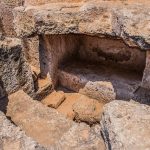
Did Jesus Christ raise Himself from the dead? The Bible is abundantly clear that it was Jesus’s Father, our Father in heaven, who raised Jesus Christ from the dead – “God the Father, who raised him from the dead” (Gal. 1:1). But on account of the Trinity concept of the eternal self-existence of the Son, many professed Christians are of the view that while being dead, Jesus could exercise power to raise Himself from the dead and to conquer death as it were. What is the true state of the dead? And was Jesus exempt from the death experience that other humans experience? The Bible clearly teaches that Jesus died. Jesus says: “I am he that liveth, and was dead” (Rev. 1:18).
Seventh-day Adventists, in particular, should not fall for the error of the Trinity because it contradicts one of their primary doctrinal pillars regarding the state of the dead – as the Bible says “For the living know that they shall die: but the dead know not any thing” (Eccl. 9:5). Jesus Christ, the Son of God, who died in our place was as much dead as any other person who dies and was not alive on a different plane while appearing to be dead. To be consistent with scripture, Jesus conquered death by the life He lived, and not while He was dead.
“He that hath ears to hear, let him hear” (Matt. 11:15).
For further information, please visit Patience of the Saints at http://thecommandmentsofgodandthefaithofjesus.com
IF CHRIST BE NOT RAISED . . .
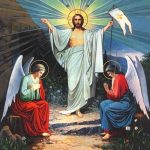
The Bible is very emphatic that Jesus Christ was raised from the dead by God, His Father – “we have testified of God that He raised up Christ” (1 Cor. 15:15). It is asserted that our faith is vain if Christ was not raised from the dead – “And if Christ be not risen, then is our preaching vain, and your faith is also vain.” (1 Cor. 15:14). But the question arises, why is the resurrection of Christ so important?
The following verses tell us:
“And if Christ be not raised, your faith is vain; ye are yet in your sins. Then they also which are fallen asleep in Christ are perished.” (1 Cor. 15:17, 18).
These words blow away a myth that is very popular in Christianity, but which is based on a misunderstanding of the Bible. The myth is that the death of Christ cancels all our sins. But we are told here that “if Christ be not raised . . . ye are yet in your sins. Then they which are fallen asleep in Christ are perished”. The death of Christ by itself is not enough to save us. The notion that God required the death of the sinner and accepted the death of Christ in place of the sinner is false.
The Bible further tells us why the resurrection of Christ is so important – “Wherefore he is able also to save them to the uttermost that come unto God by him, seeing he ever liveth to make intercession for them.” (Heb. 7:25). Jesus must be alive to make intercession for us who seek to come to God – “For Christ is not entered into the holy places made with hands, which are the figures of the true; but into heaven itself, now to appear in the presence of God for us” (Heb. 9:24). The holy places made with hands, which are figures of the true refer to the earthly tabernacle that Moses built in the wilderness.
Earthly tabernacle an object lesson
The services of the ancient tabernacle were shadows or object lessons of what Christ does in the plan of salvation to obtain pardon for our sins. It is said of the earthly priests that they “serve unto the example and shadow of heavenly things, as Moses was admonished of God when he was about to make the tabernacle” (Heb. 8:3-5).
In the earthly tabernacle, sins were not removed just by the offering of a sacrifice. The sacrifice provided the basis for the priest to minister on the sinner’s behalf. It was by the ministry of the priest that sins were forgiven. In every case, whether of the whole congregation, a ruler or any of the common people, their sins were forgiven only after the priest makes an atonement for them using the blood of the sacrifice.
In the case of a sin committed through ignorance, by the whole congregation, a young bullock was offered – “and the priest shall make an atonement for them, and it shall be forgiven them.” (Lev. 4:20). In the case of a ruler, the offering was a kid of the goats – “and the priest shall make an atonement for him as concerning his sin, and it shall be forgiven him.” (Lev. 4:26). The common people, likewise, offered a kid of the goats – “and the priest shall make an atonement for him, and it shall be forgiven him.” (Lev. 4:31).
Only sins of ignorance were atoned for; presumptuous sins were not atoned for – “And the priest shall make an atonement for the soul that sinneth ignorantly, when he sinneth by ignorance before the Lord, to make an atonement for him; and it shall be forgiven him.” (Num. 15:28). “But the soul that doeth ought presumptuously, whether he be born in the land, or a stranger, the same reproacheth the Lord; and that soul shall be cut off from among his people. Because he hath despised the word of the Lord, and hath broken his commandment, that soul shall utterly be cut off; his iniquity shall be upon him.” (Num. 15:30, 31).
Sins of ignorance, as reckoned by Jesus, could potentially include the most heinous misdeeds such as even the sin of those who crucified him; He prayed for those who crucified Him, saying, “Father, forgive them; for they know not what they do.” (Luke 23:34). Peter said the same: “I wot that through ignorance ye did it, as did also your rulers.” (Acts 3:17). Jesus recognizes human weakness and is willing to treat every possible sin as ignorance, if we repent of it, because he knows that we are susceptible to be manipulated by the Devil – “If we confess our sins, he is faithful and just to forgive us our sins, and to cleanse us from all unrighteousness.” (1 John 1:9).
Sins that are not repented of and confessed are not atoned for. Far from being cancelled by the death of Christ, they remain on the heads of those who committed them and are paid for by the sinner in the lake of fire – “Then shall he say also unto them on the left hand, Depart from me, ye cursed, into everlasting fire, prepared for the devil and his angels” (Matt. 25:41).
But what happens to those sins that were confessed? Does Jesus pay the penalty for those on our behalf and dies eternally like the unrepentant sinner? No! In fact, He is alive right now and will remain alive forevermore (Rev. 1:18). In the object lesson of the ancient sanctuary ministration, the process of the final removal of sins from among the saints is illustrated.
Day of Atonement and final removal of sins
Once every year, on the Day of Atonement, all the confessed sins were placed on the head of the Scapegoat, which was then led out of the camp – “And Aaron shall lay both his hands upon the head of the live goat, and confess over him all the iniquities of the children of Israel, and all their transgressions in all their sins, putting them upon the head of the goat, and shall send him away by the hand of a fit man into the wilderness: And the goat shall bear upon him all their iniquities unto a land not inhabited: and he shall let go the goat in the wilderness.” (Lev. 16:21, 22).
The Scapegoat’s blood was not shed on behalf of the sinners, but all the confessed sins were placed on his head, and he is removed from the camp forever, never to return. The Scapegoat represents Satan, who would have caused all the sins of the repentant sinners to have been committed. While interceding for us as repentant sinners, Christ would have “borne our griefs, and carried our sorrows” (Isa. 56:4). It was in the process of taking unto Himself our sin problem, that Christ was crucified by wicked hands (Acts 2:23). He was not bearing punishment from God that was intended for us. By His death He has exposed Satan as a murderer and the real culprit behind the sins that he would have caused God’s children to commit (Heb. 2:14).
In interceding for us, Christ points to our repentance as evidence that we are not genuinely seeking to join Satan in his rebellion against God. He further points to Satan as the real culprit who should pay the penalty for the sins that he would have caused us, the repentant sinners, to commit. Thus, the repentant sinners are acquitted of the charges associated with those sins. Christ further intercedes for us to be given the Holy Spirit that we might be empowered to resist the Devil and live righteously without continuing to commit sins.
The final intercession on our behalf during the last days, as was typified by the Day of Atonement, is described as follows: “And another angel came and stood at the altar, having a golden censer; and there was given unto him much incense, that he should offer it with the prayers of all saints upon the golden altar which was before the throne. And the smoke of the incense, which came with the prayers of the saints, ascended up before God out of the angel’s hand. And the angel took the censer, and filled it with fire of the altar, and cast it into the earth: and there were voices, and thunderings, and lightnings, and an earthquake.” (Rev. 8:3-5).
The censor being cast out of heaven signals that this is the final intercession, after which, it will be declared, “He that is unjust, let him be unjust still: and he which is filthy, let him be filthy still: and he that is righteous, let him be righteous still: and he that is holy, let him be holy still. And, behold, I come quickly; and my reward is with me, to give every man according as his work shall be.” (Rev. 22:11, 12).
Let us repent of our sins before it is too late and accept the gift of the Holy Spirit who empowers us to live above sin – “Then will I sprinkle clean water upon you, and ye shall be clean: from all your filthiness, and from all your idols, will I cleanse you. A new heart also will I give you, and a new spirit will I put within you: and I will take away the stony heart out of your flesh, and I will give you an heart of flesh. And I will put my spirit within you, and cause you to walk in my statutes, and ye shall keep my judgments, and do them.” (Eze. 36:25-27).
It has been shown that the unrepentant sinner will pay the penalty for his own sin in the lake of fire. The sins of the repentant sinner will be placed on Satan, who will pay the penalty for those, having caused them to be committed. Where then, did the idea come from that Christ paid the penalty for all sins? This widespread misunderstanding arises from the fact that God did deliver His Son into the hand of Satan in place of Adam, because Adam obeyed Satan and gave Satan some claim over him before Adam’s children were born. In this sense, Christ was turned over as a ransom for humanity due to Adam’s sin. This transaction effectively cancels any claim that Satan might have on us because of Adam’s sin. But it does not cancel our personal sins which we must account for and repent of to obtain forgiveness for them.
We should not be drawn into a pagan philosophy that portrays God as an unforgiving and exacting person who insists that someone must be punished for even the confessed sins and ultimately inflicting the punishment on His own Son. Further, we should not deceive ourselves into thinking that all our sins are already cancelled by the death of Christ, so that it would not even matter that we continue sinning. May the Lord help us to repent of our sins and be saved before it is too late.
“He that hath ears to hear, let him hear” (Matt. 11:15).
For further information, please visit Patience of the Saints at http://thecommandmentsofgodandthefaithofjesus.com/
Questions and comments may be sent by e-mail to: commandmentsofgodandfaithofjesus@yahoo.com
The Second Commandment, The Trinity and The Omnipresence of God
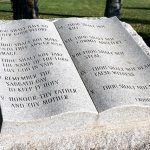
I always wondered what was so significant about the second Commandment that Rome found it necessary to remove it altogether from the Ten Commandments. But it appears that there is a fundamental truth in that Commandment concerning where God’s presence is that is intended to protect us from all forms of false worship.
The second Commandment tells us that we should not bow down before any image. This implies that God is not in any image. Which means that God is not everywhere. The Bible tells us that God is in heaven; and heaven is not everywhere. Heaven is above the earth and that is where we should direct our worship to God, where He is. He knows everything that happens everywhere and can go wherever He pleases but His abode is in heaven where Jesus, our High Priest and intercessor, is presenting our cases to Him. – “Now of the things which we have spoken this is the sum: We have such an high priest, who is set on the right hand of the throne of the Majesty in the heavens” (Heb. 8:1).
Worshipping God Where He Is
Furthermore, both the prophets Daniel and John saw God in heaven with the angels gathered around His throne and Jesus being separate and distinct (Dan. 7 and Rev. 4, 5). Daniel said “the Ancient of days did sit” (Dan. 7:9) and “one like the Son of man came with the clouds of heaven, and came to the Ancient of days” (Dan. 7:13). John said “one sat on the throne” (Rev. 4:2) who was worshipped as the Creator to whom it was said “Thou art worthy, O Lord, to receive glory and honour and power: for thou hast created all things, and for thy pleasure they are and were created” (Rev. 4:11), with Jesus appearing before Him to receive a book and power and authority, as the Lamb who was slain, while the angels sang, “Blessing, and honour, and glory, and power, be unto him that sitteth upon the throne, and unto the Lamb for ever and ever.” (Rev. 5:13).
God is not everywhere all at once like a vapour while part of Him or an image sits on the throne representing Him. God Himself sits, of whom man was made in His image after His likeness, “made after the similitude of God” (James 3:9).
Logically, if God is everywhere, He can be worshipped wherever He is. One could then bow down and worship before a stone, a tree, a person or any object, not as worshipping the object but as worshipping God, since God is in it. That would open the door for the worship of false Gods as no one would be able to tell the difference whether you are worshipping the true God or not.
It would not be consistent to forbid worshipping before an object if God is in the object and one is worshipping, not the object, but God who is in the object. This is evident in the experience of the children of Israel in the wilderness. God appeared to them in a cloud and they were not forbidden to bow before Him in the cloud – “And the LORD said unto Moses, Lo, I come unto thee in a thick cloud” (Ex. 19:9), “And all the people saw the cloudy pillar stand at the tabernacle door: and all the people rose up and worshipped, every man in his tent door” (Ex. 33:10). If God is not in a particular place, say in an image, it means that there is at least one place where He is not. He cannot be everywhere and not everywhere at the same time.
The idea that the Holy Spirit is God present everywhere was precisely the argument that Dr. John Harvey Kellogg put forward to justify his pantheistic teachings. And Ellen White told him that he was wrong. Initially, he said that God was in everything. And when God instructed Ellen White to oppose it, he modified it by saying that at the time of his first presentation of the matter in the book “The Living Temple” he did not believe in the Trinity. Because of that, he said he had not given a clear explanation of the matter. He went on to explain that he had now come to believe in the Trinity and could better explain his idea. The new explanation was that it was not God the Father, but God the Holy Ghost who was everywhere and in everything. Ellen White told him that he was wrong. And we can see why. If God the Holy Spirit is everywhere and can be worshipped, it is a doorway to replace worshipping God and Christ in heaven entirely.
Another modified version of Kellogg’s idea is that the Holy Spirit is really Christ himself or both God and Christ in an omnipresent form. This is also not correct as it places God and Christ on earth rather than in heaven.
Omnipresent Representative
The pioneers of Seventh-day Adventism stated in their Fundamental Principles of faith published in the 1889 Yearbook that God was everywhere present by His representative, the Holy Spirit. At face value, this would suggest that this representative is omnipresent. But it is perhaps more consistent with scripture to say that He is everywhere present by His representatives the holy spirits. Holy spirits are ministering spirits sent from heaven – “And he saith unto him, Verily, verily, I say unto you, Hereafter ye shall see heaven open, and the angels of God ascending and descending upon the Son of man.” (John1:51). “Are they not all ministering spirits, sent forth to minister for them who shall be heirs of salvation?” (Heb. 1:14). The prophet Zechariah also saw chariots that were sent into the different parts of the earth; and when he asked “What are these”, the answer given was that “These are the four spirits of the heavens, which go forth from standing before the Lord of all the earth” (Zech. 6:4, 5). This again, shows that spirits are sent by God into all the earth, and that these spirits are not God Himself.
This is consistent with the Hebrew word ruach and the Greek word pneuma that are translated in the Bible as spirit. These words are also translated spirits, thus indicating that the Holy Spirit need not be seen as one individual being who is omnipresent but many spirit beings representing God everywhere.
From this perspective, there is no denying that the Comforter, the Holy Spirit, sent at Pentecost is a person – only not a God-being to be worshipped. Like the Angel of Revelation 18 who comes down from heaven with the latter rain – a similar occurrence as that which took place at Pentecost except more extensive – the Comforter would be seen as a messenger sent by Christ from heaven, as stated repeatedly in John 14-16. Ellen G. White describing the latter rain speaks of a mighty angel from heaven being sent to do this work and further said, “Angels were sent to aid the mighty angel from heaven” (Ellen. G. White, Story of Redemption, p. 399).
Correcting Error
Some persons have objected by saying that Ellen G. White sought to correct one Brother Chapman who was saying that the Holy Spirit could be an angel. To be more accurate, Brother Chapman, according to a letter that Ellen G. White wrote to him, was teaching that the Holy Spirit is the angel Gabriel. Ellen G. White told him that his view was speculative and unscriptural. Indeed, the Bible does not teach that; and neither is that view being advanced here. She admonished him to come into harmony with his brethren on the matter and not seek to bring in any new idea regarding that subject. This was in 1891, when the stated belief of the church, as presented in the 1889 Seventh-day Adventist Yearbook, was that the Holy Spirit was God’s representative. This was before Kellogg sought to bring in errors concerning the Holy Spirit and the personality of God that she later had to refute.
At that time, when she wrote to Brother Chapman, she said “silence is golden” and indeed it would have been “golden” to remain silent on the matter of who or what is the Holy Spirit, at that time, but certainly not later when clearly erroneous views were being pressed upon the church regarding the matter. It certainly would not be “golden” now, either, to remain silent when the Trinitarian view, which the pioneers rejected, is now being actively promoted within the church and many who profess to reject the Trinitarian view are promoting virtually the same thing that Kellogg was trying to introduce into the church. Here is a sample of what Kellogg was saying:
“God the Father sits upon his throne in heaven where God the Son is also; while God’s life, or Spirit or presence is the all-pervading power which is carrying out the will of God in all the universe” (Letter from JH Kellogg to GI Butler dated October 25, 1903).
“The question may arise in the mind of some one, How do we know that God is in us? We are perhaps too prone to think of God as in heaven, or in some definite place, and only omnipresent in an accommodated or figurative sense. Let us ask the question, “Where is God?” – (Presentation “God in Man” made by JH Kellogg at the 32nd Session of the General Conference of Seventh-day Adventists on Feb. 15, 1897 at Lincoln, Nebraska and published in the General Conference Daily Bulletin of Feb. 18, 1897, Vol. 7. – No. 5).
The popular view that has been embraced by many who have rightly rejected the Trinity, has unfortunately been tainted by this popular error that is common among professed Christians, New Agers and pagans alike – the error that God is personally present inside people – one that was plainly rejected by the Seventh-day Adventist pioneers. The pioneer, James White, even wrote an article responding to the claim that God is everywhere, by saying that “God is everywhere by virtue of his omniscience” and that “God is in heaven”; further, “if God is as much in every place as he is in any one place, then heaven is also as much in every place as it is in any one place, and the idea of going to heaven is all a mistake. We are all in heaven; and the Lord’s prayer, according to this foggy theology simply means, Our Father which art everywhere, hallowed be thy name. Thy kingdom come, thy will be done, on earth, as it is everywhere”.
Holy Spirit and Blasphemy
It should be noted that Jesus’s warning against blaspheming against the Holy Spirit is not implying that the Holy Spirit is more to be revered than Jesus Himself since one will not be forgiven if they speak against the Holy Spirit whereas they can be forgiven if they speak against the Son (Matt. 12:31, 32). Jesus went back to heaven and promises to return to this earth to take us to His Father’s house in heaven. He left the Holy Spirit to guide us until He returns. If we reject that guidance by blaspheming against the Holy Spirit, there will be nobody to guide us. The situation is like what God told the children of Israel in the wilderness – “Behold, I send an Angel before thee, to keep thee in the way, and to bring thee into the place which I have prepared. Beware of him, and obey his voice, provoke him not; for he will not pardon your transgressions: for my name is in him.” (Ex. 23:20, 21). It is simply warning us not to reject the Holy Spirit’s guidance. It is not forbidding us seeking to understand who the Holy Spirit is or what the Holy Spirit does.
It should be noted that the word “spirit” has different meanings, so the understanding of the expression depends on the context. It could refer to God Himself, to Christ or to angels as spirit beings, or to the inner spirit or mind of the person, depending on the context. So, there is a sense in which Christ is in us, meaning that His mind is in us through His words, thoughts and character. No one should therefore think that the spirit of Christ that dwells in us is an angel or Christ Himself or God in person.
Alpha and Omega of Deadly Heresies
So, there we have it. The church has now fully accepted Kellogg’s idea. Ellen White said that the initial presentation by Kellogg was the alpha of deadly heresies. She said that the omega would follow shortly afterwards and would be accepted. And it did follow shortly afterwards in Kellogg’s modified version, based on his acceptance of the Trinity. And the church has now fully accepted it – that God (the Holy Spirit) is everywhere and should be worshipped. So, based on current practice, Jesus is worshipped, the Holy Spirit is worshipped but the One true God is almost entirely ignored. Jesus, praying to His Father, made it clear who the “only true God” is and identified Himself as the one sent by God – “And this is life eternal, that they might know thee the only true God, and Jesus Christ, whom thou hast sent.” (John 17:3).
Nowhere in the Bible is worship given to anyone else except the one seated on the throne who is referred to as “LORD God Almighty, which was, and is, and is to come” (Rev.4:8) and to Christ, the Lamb, as it will be in the new earth – “And I saw no temple therein: for the Lord God Almighty and the Lamb are the temple of it.” (Rev. 21:22). God is the Father of Christ. Accordingly, Christ, the Lamb is seen with “an hundred forty and four thousand, having his Father’s name written in their foreheads” (Rev. 14:1). It is the name of the Lamb’s Father that will be written in their foreheads.
Whatever one’s concept of the Godhead, the term “godhead” is used only three times in the Bible (Acts 17:29, Rom. 1:20 and Col. 2:9) and in none of these places is the expression used to replace the idea of God being a single individual who has a Divine Son who is worshipped alongside Himself. And not even once does the term “godhead” in scripture allude to the worship of anyone else.
All worship should be directed to God and Christ in heaven. It is not about where we are when we worship but, like sending a petition to the king of England, we do not send it to Spain or Australia but to him in England where he is. Similarly, Jesus in teaching us how to pray directed that we say, “Our Father which art in heaven”.
We should not be praying to nor worshipping anything on earth. We should pray to God in heaven, approaching His throne through Christ, our Mediator, and we should direct our worship to heaven where God is. This is the substance of the second Commandment that Rome has removed.
“He that hath ears to hear, let him hear” (Matt. 11:15).
For further information, please visit Patience of the Saints at http://thecommandmentsofgodandthefaithofjesus.com/
Questions and comments may be sent by e-mail to: commandmentsofgodandfaithofjesus@yahoo.com
“Thus Saith The Lord…” Above Human Speculation

People are missing the fact that prophets are not perfect; and are not necessarily perfect expositors or perfect interpreters of other prophets’ revelations. Prophets do not even have the authority to change what God revealed to them. They do not get revelations on everything, only on specific things. We must not make the mistake of rejecting what God has revealed through a prophet simply because we think them imperfect in their understanding of certain other matters on which they got no direct revelation.
A highly respected Union President once said: “An ounce of inspiration is better than tons of speculation”.
Good king Jehoshaphat said: “Hear me, O Judah, and ye inhabitants of Jerusalem; Believe in the LORD your God, so shall ye be established; believe his prophets, so shall ye prosper.” (2 Chron. 20:20).
The truth concerning God and Christ was revealed in vision to Ellen G. White in the Great Contoversy vision in 1858 while at a funeral service in Lovett’s Grove, Ohio. You can read how she got the vision and how Satan tried to kill her to prevent her writing it, in the book Spiritual Gifts Vol. 2 pgs. 265-272 (by Ellen G. White). You will read that she “could write at first but one page a day, then rest three”. In this condition she wrote what was revealed to her concerning the Great Controversy. The very first words she wrote were as follows:
“The Lord has shown me that Satan was once an honored angel in heaven, next to Jesus Christ. His countenance was mild, expressive of happiness like the other angels. His forehead was high and broad, and showed great intelligence. His form was perfect. He had a noble, majestic bearing. And I saw that when God said to his Son, Let us make man in our image, Satan was jealous of Jesus. He wished to be consulted concerning the formation of man. He was filled with envy, jealousy and hatred. He wished to be the highest in heaven, next to God, and receive the highest honors. Until this time all heaven was in order, harmony and perfect subjection to the government of God. 1SG 17.1
It was the highest sin to rebel against the order and will of God. All heaven seemed in commotion. The angels were marshaled in companies with a commanding angel at their head. All the angels were astir. Satan was insinuating against the government of God, ambitious to exalt himself, and unwilling to submit to the authority of Jesus. Some of the angels sympathized with Satan in his rebellion, and others strongly contended for the honor and wisdom of God in giving authority to his Son. And there was contention with the angels. Satan and his affected ones, who were striving to reform the government of God, wished to look into his unsearchable wisdom to ascertain his purpose in exalting Jesus, and endowing him with such unlimited power and command.” Ellen G. White, Spiritual Gifts Vol. 1 pg. 17
God is love. Love trumps unity. The Trinity teaches unity, but the truth teaches love.
Here is the love of God manifested:
“Said the angel, Think ye that the Father yielded up his dearly beloved Son without a struggle? No, no. It was even a struggle with the God of heaven, whether to let guilty man perish, or to give his beloved Son to die for them. Angels were so interested for man’s salvation that there could be found among them those who would yield their glory, and give their life for perishing man. But, said my accompanying angel, That would avail nothing. The transgression was so great that an angel’s life would not pay the debt. Nothing but the death and intercessions of his Son would pay the debt, and save lost man from hopeless sorrow and misery.” Ellen G. White, Spiritual Gifts Vol. 1, pg. 26.
Not even the prophet herself has the authority to contradict what God revealed directly. Thus saith the LORD…. above all human speculation.
The three powers of heaven are God, Christ and angels. The Comforter is a messenger sent by Christ from the Father, aided by other ministering spirits.
Like Abraham, when he was called to yield his only son, Isaac, God gave His only begotten Son. Christ was already His Son before coming to this earth.
Where in the Bible does it say that the one God is three persons?
IT IS TIME TO REPENT!
Think . . .Why were there pagan Trinities but none in Israel?
“God is one” (Deut.6:4) – not three.
“One God and Father of all, who is above all” (Eph.4:6).
“the God and Father of our Lord Jesus Christ” (Eph.1:3).
I challenge any Trinitarian to show me the love of the Father in their Trinitarian philosophy.
I repeat: “An ounce of inspiration is better than tons of speculation”.
“Jehoshaphat stood and said, Hear me, O Judah, and ye inhabitants of Jerusalem; Believe in the LORD your God, so shall ye be established; believe his prophets, so shall ye prosper.” (2 Chron. 20:20).
Ask yourselves, which Bible writer ever taught or ever articulated such an idea that God is three persons? Every Bible scholar knows that the entire concept was formulated between 325 AD and 381 AD during the period of apostasy that started with Emperor Constantine.
It is time to repent!
If Ellen White got nothing else right, she certainly got this one right. There is no question regarding the validity of this vision.
“He that hath ears to hear, let him hear” (Matt. 11:15).
For further information, please visit Patience of the Saints at http://thecommandmentsofgodandthefaithofjesus.com/
Questions and comments may be sent by e-mail to: commandmentsofgodandfaithofjesus@yahoo.com
SALVATION, REPENTANCE AND THE FREE GIFT

PENALTY REMAINS FOR SINS NOT REPENTED OF
There is a popular notion in modern Christianity that the death of Christ has paid the penalty for all sins, and that persons are lost only because they did not accept that their debt of sin has been cleared. But we should examine the Biblical teaching concerning this matter and consider the implications of this. Whoever said that Christ paid the penalty for all sins? Do not the wicked pay the penalty for their own sins in the lake of fire (Rev. 21:8)? And doesn’t Satan, as the Scapegoat, pay the penalty for the sins that he would have caused the repentant sinner to commit, when those confessed sins are placed upon him (Lev. 16:21, 22)? It does not suffice to say that the penalty was paid but people are lost because they did not accept that the debt is already paid, because many will claim to accept Christ, wanting salvation, even saying, “Lord, Lord, have we not prophesied in your name?” and will still be lost because they did not do God’s will (Matt.7:21, 22).
It is the sin of Adam that had condemned us all that Christ paid the penalty for at Calvary. That is the free gift to all – “Therefore as by the offence of one judgment came upon all men to condemnation; even so by the righteousness of one the free gift came upon all men unto justification of life.” (Rom.5:18);
But we must confess our own sins and repent of them to be forgiven of them – “If we confess our sins, he is faithful and just to forgive us our sins, and to cleanse us from all unrighteousness.” (1 John 1:9).
In addition to the free gift of forgiveness to all humanity for the sin of Adam that had condemned us all, and God’s offer of forgiveness for our individual sins, if we repent of them, God offers us a new heart and spirit that will empower us to live righteously – “A new heart also will I give you, and a new spirit will I put within you: and I will take away the stony heart out of your flesh, and I will give you an heart of flesh. And I will put my spirit within you, and cause you to walk in my statutes, and ye shall keep my judgments, and do them.” (Eze. 36:26, 27). This new heart and spirit we can receive only by our conscious choice, whereas the free gift was given freely to all humanity when we were enemies, independent of any choice that we would have made or not made – “For if, when we were enemies, we were reconciled to God by the death of his Son, much more, being reconciled, we shall be saved by his life.” (Rom. 5:10).
The point is that there is a free gift that has been purchased for us that everybody has already received, by the death of Christ. That free gift gives each of us, including Adam, a second probation. We are all reconciled to God by that free gift – even while we are enemies – that is why we are alive right now, and Adam was not cut off instantaneously. But that free gift does not give us salvation from our own sins independent of us having to do anything. We must repent of those sins for ourselves or pay the penalty for them ourselves. Christ did not pay the penalty for those. Either we pay the penalty for them ourselves or Satan pays the penalty for them as the real culprit behind them. In other words, the death of Christ is not like an Indulgence against which Martin Luther protested – a free pass that allows you to sin as you like because the sins are already paid for.
The entire sanctuary service is all about how our confessed sins ultimately get placed on Satan, the Scapegoat, if we truly repent. And it is the death of Christ that makes that possible. For emphasis, Christ’s death makes it possible. It does not cancel all sins. If it did, then everybody would be free – good and bad alike. And it is not that everybody gets their sins cancelled but they just need to accept it. Many will genuinely think that they have accepted Christ but will be lost because they refuse to do God’s will. It is not just about accepting that it has already been done.
Ellen G. White had this to say:
“Death entered the world because of transgression. But Christ gave His life that man should have another trial. He did not die on the cross to abolish the law of God, but to secure for man a second probation.” (Ellen G. White, Testimonies to Ministers and Gospel Workers, TM134).
“Infinite wisdom devised the plan of redemption, which places the race on a second probation by giving them another trial.” (Ellen G. White, Testimonies Volume 3, p. 484).
“As representative of the fallen race, Christ passed over the same ground on which Adam stumbled and fell. By a life of perfect obedience to God’s law, Christ redeemed man from the penalty of Adam’s disgraceful fall. Man has violated God’s law. Only for those who return to their allegiance to God, only for those who obey the law that they have violated, will the blood of Christ avail. Christ will never become a party to sin. Bearing the penalty of the law, He gives the sinner another chance, a second trial.” ( Ellen G. White, 6BC 1092 – Manuscript 126, 1901).
“The instant man accepted the temptations of Satan, and did the very things God had said he should not do, Christ, the Son of God, stood between the living and the dead, saying, “Let the punishment fall on Me. I will stand in man’s place. He shall have another chance” (Ellen G. White, Letter 22, February 13, 1900). 1BC 1085.2
By His present life, as our Advocate and High Priest, Christ intercedes on our behalf before the Father and in the presence of the holy angels so that we can be forgiven of our sins and be empowered with spiritual gifts so that we can live righteously. He will receive the kingdom of this earth from His Father and will return at His second coming to receive us (1 John 2:1; Eph. 4:10-15; Rev.3:5; Heb.4:14-16; Dan. 7:13, 14; John 14:1-3).
So, let us repent and seek God’s forgiveness for our own sins and accept the power that He offers us to live righteously. Let us not think that we are rich and increased with goods and have need of nothing, when we are in God’s sight, “wretched, and miserable, and poor and blind and naked” (Rev. 3:17). Instead, let us seek God for gold tried in the fire that we might be rich, white raiment that we might be clothed, that the shame of our nakedness does not appear, and eyesalve that we might see (Rev.3:18).
Let us not think that all our sins are already paid for, and we are already saved, without us having a part to play – so that we can sin with impunity. If that were so, then all the wicked would also have a ticket (or Indulgence) that guarantees their place in heaven.
“He that hath ears to hear, let him hear” (Matt. 11:15).
For further information, please visit Patience of the Saints at http://thecommandmentsofgodandthefaithofjesus.com/
Questions and comments may be sent by e-mail to: commandmentsofgodandfaithofjesus@yahoo.com
Unity Upon The Foundations Laid By God
After the passing of time in 1844, God raised up a people to do a special work which would prepare His followers to receive the Latter Rain and to hail Christ as their Saviour at His glorious return. It is today, as it has always been, Christ’s desire to see his followers united in heart and spirit upon the solid, immovable platform of truth.
Unity is good, only if the premises on which unity is established are good. Uniting upon a false premise or uniting to do something that is bad is worse than not uniting at all. The scriptures record an occasion when Israel was so united that when they shouted, “the earth rang again” (1 Sam. 4:5) and “the Philistines were afraid, for they said, God is come into the camp. And they said, Woe unto us! for there hath not been such a thing heretofore. Woe unto us! who shall deliver us out of the hand of these mighty Gods? these are the Gods that smote the Egyptians with all the plagues in the wilderness.” (1 Sam. 4:7, 8). But unfortunately, it ended with the Ark being taken away by the Philistines, the shock of the news causing Eli, the High Priest, to fall over and break his neck and a woman in labour, dying in child-birth and crying “Ichabod, saying, The glory is departed from Israel” (1 Sam. 4:21). What was the reason for such a tragedy? Simply put, God was not with them on that mission! Yes, they were still God’s people, but He was not with them! On any mission, we must first ensure that God is with us.
Efforts are being made to unite the Advent people today, and that is good. The 28 Fundamental Beliefs are being promoted as a doctrinal foundation for unity. But is this the foundation on which God would have us unite? Would the pioneers and all faithful Seventh-day Adventists be able to unite on such a foundation? Or is it a foundation that would exclude some of God’s faithful children? A faithful believer who got baptized in 1978, pointed out that the Baptismal Vow that he took, had, as the first belief, the following: “I believe in God the Father, in His Son Jesus Christ, and in the Holy Spirit”. That vow came straight from the scriptures – Matt. 28:19, 20. But now, for his faithful children to be accepted into fellowship, they are required to make the following vow: “I believe there is one God: Father, Son, and Holy Spirit, a unity of three co-eternal Persons.”. This new version includes elements that are not explicitly stated in scripture, and thus excludes those who have chosen to go no further than what the scriptures explicitly say. Was the previous statement not clear enough and scriptural? Why then change it to exclude some of the faithful?
Present state
It is very unfortunate that the present state among those who embrace the special truths for this time is a far cry from the state of unity that is envisioned in Christ’s earnest prayer of John the seventeenth chapter. Numerous groups and factions of varying sizes, all of which claim to be Seventh-day Adventist endeavour to establish legitimacy (and in some cases, exclusive right) for their operations, while at the same time manifesting towards each other, in some cases, a cold indifference, suspicion and virtual hostility, even denouncing each other openly at times.
It is a fact that the coming of the Lord is near, and before He comes, the venom of the Beast and his Image will be unleashed against, not one only, or another of these groups, but against all Sabbath-keeping Adventists. The inspired messenger has repeatedly urged “the little company” to “press together”.
We cannot afford to deny our history at this time, because we have nothing to fear for the future except as we forget how God has led us in the past. Therefore, there is need for a re-focus on the distinctive truths which have brought the Advent people into existence. Otherwise, we run the risk of failing to acknowledge the Divinely established criteria that identifies Seventh-day Adventists as God’s denominated people. We are likely to establish our own criteria for the identification of God’s denominated people and hence continue either to exclusively acknowledge the faction with which we identify ourselves, or wrongfully denounce those who we think have no right to consider themselves as being numbered among God’s denominated people.
There is a shortage of pastors worldwide. Is it possible that many sincere followers of Christ who would like to commit themselves to the work are not being attracted to the work of the church because they feel that sincerity to their own consciences might be negatively affected?
Highest Authority God’s Word, Not the Popular Vote
Those who think that the collective voice of the people is the voice of God need to disabuse their minds of that fallacy; whether the voice of the people comes in the form of a majority vote of the world church or in the form of the pronouncements of its leaders. As one well respected former Union President once said, “An ounce of inspiration is better than tons of speculation”, a plain “Thus saith the Lord” takes precedence above all human pronouncements or opinions. Biblical authority clearly establishes this, as in the case cited above, where a unanimous vote of the people to fetch the Ark and bring it in their midst as they went to battle with the Philistines was no guarantee that God was with them (1 Sam. 4:3-5).
There is an even more striking case that illustrates this: the vote of the leaders of Israel – God’s people – to crucify Jesus, the Son of God. On hearing of the remarkable miracle of Jesus in raising Lazarus from the dead, the leaders laid the plot as described in the Biblical account as follows: “Then gathered the chief priests and the Pharisees a council, and said, What do we? for this man doeth many miracles. If we let him thus alone, all men will believe on him: and the Romans shall come and take away both our place and nation. And one of them, named Caiaphas, being the high priest that same year, said unto them, Ye know nothing at all, Nor consider that it is expedient for us, that one man should die for the people, and that the whole nation perish not. . . . Then from that day forth they took counsel together for to put him to death.” (John 11:47-50, 53). So depraved and desperate the leaders became that they even conspired to kill Lazarus who was raised from the dead, because his very existence, as an evidence of Jesus’s miracle, was a problem to them (John 12:10, 11).
Alternative Vow
So where does it leave us, now that the SDA Church has in place an unscriptural vow that persons are being asked to take to become members of the church? Some persons see it as a mark of Divine providence that an alternative vow is allowed, that has three articles, of which the relevant one says: “Do you accept the teachings of the Bible as expressed in the Statement of Fundamental Beliefs of the Seventh-day Adventist Church and do you pledge by God’s grace to live your life in harmony with these teachings?” Some persons conscientiously take this vow with the understanding that it is not an acceptance of all the Fundamental Beliefs of the Seventh-day Adventist church but rather an acceptance of all Bible teachings that are contained in the Fundamental Beliefs of the Seventh-day Adventist church. This does not declare acceptance of those elements of the Fundamental Beliefs that are not teachings of the Bible. Technically, there might be some plausibility in this view, so conscientious pastors can opt to use this vow rather than force people, who want to be a part of that administration within God’s Advent Movement, to take an unscriptural vow.
For those whose conscience and sense of transparency will not allow them to take even the Alternative Vow, they have done no wrong by that decision, and should not allow anyone to send them on a guilt trip to fear that they are therefore on their way to eternal damnation because they refuse to violate their conscience, as the Bible clearly states that “there are differences of administrations, but the same Lord” (1 Cor.12:5). Notwithstanding, there is value in working together with others who are of the same faith. God’s remnant people are urged to “Press together”.
May the Lord help us, and raise up faithful servants who are not seeking to exalt themselves or even the church primarily, but God first.
“He that hath ears to hear, let him hear” (Matt. 11:15).
For further information, please visit Patience of the Saints at http://thecommandmentsofgodandthefaithofjesus.com/
Questions and comments may be sent by e-mail to: commandmentsofgodandfaithofjesus@yahoo.com
A Movement Raised Up By God

While it is true that the Three Angels’ Messages contain truth of a general nature – for example, “worship him that made heaven, and earth, and the sea, and the fountains of waters” – it is also important to note that the vision of three angels flying one after the other, represents a sequence of prophesied events. These events were fulfilled at specific times, in a similar way as the four Beasts of Daniel 7 arose sequentially and represented four successive kingdoms. Likewise, the Seven Churches are sequential in their prophetic fulfilment and represent God’s Church at specific times, some of which overlap with the periods represented by the three angels.
The first angel represents the initial stages of the Advent Movement, before the disappointment of 1844, as they preached a message of the second coming of Christ and the hour of God’s judgement approaching. The second angel represents a later stage of the same Movement, starting in the summer of 1844, when the focus of the message was a call for people to leave Babylon, the churches that had rejected the message of the soon return of Jesus Christ. The third angel represents the later Advent Movement that has been preaching the Sabbath and warning people against the Mark of the Beast, from shortly after the disappointment in 1844.
There is an overlap between the time period covered by the three angels and the time period covered under the last three of the seven churches, Sardis, Philadelphia and Laodicea. It was said to Sardis that “thou hast a name that thou livest, and art dead.”; to Philadelphia, “I have set before thee an open door, and no man can shut it”; and to Laodicea, “because thou art lukewarm, and neither cold nor hot, I will spue thee out of my mouth. Because thou sayest, I am rich, and increased with goods, and have need of nothing; and knowest not that thou art wretched, and miserable, and poor, and blind, and naked” (Rev. 3:1-17). Unlike Sardis and Laodicea, there was no rebuke for Philadelphia.
Many persons view Philadelphia as the period covering what is known as the Great Awakening or the Evangelical Revival, extending up to the disappointment in 1844; and Laodicea, they see as the period from 1844 onward. In this, they give God’s commendations of Philadelphia to a brand of Christianity that was considered by men to be alive, but which God’s message declared was dead. The testimony concerning the churches that rejected the Advent Message before the disappointment was as follows:
“But the churches generally did not accept the warning . . . . . . The message which God had sent for the testing and purification of the church revealed all to surely how great was the number who had set their affections on this world rather than upon Christ. The ties which bound them to earth were stronger than the attractions heavenward. They chose to listen to the voice of worldly wisdom and turned away from the heart-searching message of truth.
“In refusing the warning of the first angel, they rejected the means which Heaven had provided for their restoration. They spurned the gracious messenger that would have corrected the evils which separated them from God, and with greater eagerness they turned to seek the friendship of the world. Here was the cause of that fearful condition of worldliness, backsliding, and spiritual death which existed in the churches in 1844.”
– White, Ellen G., The Great Controversy, p. 379, 380.
The churches were dead, even though they were thought to be alive. This was the period leading up to the disappointment in 1844.
Where then would Philadelphia fall? Philadelphia comes immediately after the dead Sardis. Consider what was said of Philadelphia: “I have set before thee an open door and no man can shut it” and “thou hast a little strength”, “hast kept my word, and hast not denied my name” and “hast kept the word of my patience” (Rev. 3:8-10). This is an apt description of the early Pioneers of the Adventist Movement just after the disappointment of 1844. The testimony concerning the Pioneers was as follows:
“I was pointed back, and saw the condition of God’s people in 1844. Then God was pleased with them, and his love rested upon them.” – White, Ellen G., Spiritual Gifts, Vol. 2, p. 279.
“I saw a company who stood well guarded and firm, and would give no countenance to those who would unsettle the established faith of the body. God looked upon them with approbation. I was shown three steps—one, two and three—the first, second and third angels’ messages. Said the angel, Woe to him who shall move a block, or stir a pin in these messages. The true understanding of these messages is of vital importance. The destiny of souls hangs upon the manner in which they are received. I was again brought down through these messages, and saw how dearly the people of God had purchased their experience. It had been obtained through much suffering and severe conflict. Step by step had God brought them along, until he had placed them upon a solid, immovable platform.” – White, Ellen G., Spiritual Gifts, Vol. 1, p. 168, 169.
How long did this period of Divine approval last? It did not last more than a few years. The transition to Laodicea took place by 1857. In that year, the situation was described as follows:
“In the spring of 1857, I accompanied my husband on a tour East. His principal business was to purchase the Power Press. We held conferences on our way to Boston, and on our return. This was a discouraging tour. The testimony to the Laodicean church was generally received; but some in the East were making bad use of it. Instead of applying it to their own hearts, so as to be benefited by it themselves, they were using the testimony to oppress others . . . . . .”
“I saw that the testimony to the Laodiceans applied to God’s people at the present time, and the reason it has not accomplished a greater work, is because of the hardness of their hearts.” – White, Ellen G., Spiritual Gifts, Vol. 2, p. 222, 223.
It is significant, what a main cause for this condition was. We are told:
“And I saw what God marked above everything else was their contented state. They have the truth. None can successfully oppose, and they enjoy it, as if the Saviour had no work for them to do in the salvation of souls.” – White, Ellen G., Spiritual Gifts, Vol. 2, p. 279.
This point in time was not immediately after the disappointment when they were struggling to hammer out the truth by tireless study of the scriptures. They were now at a point when they had the truth and were contented that nobody could oppose them. This was even before the organization was established. By 1857, much of the severe hardship had already passed. The account was:
“Could some be placed back ten or twelve years, and labor through the discouragements that then existed, they would find a great change in the labor now, compared with what it was then. Then the friends of the cause were few, their means limited, and it was a constant battle against error and fanaticism. Privation and want were then endured by God’s servants without murmuring.” – White, Ellen G., Spiritual Gifts, Vol. 2, p. 286.
The Church of Philadelphia was the Post-Disappointment, Pre-Organization Movement that had a short span from the end of the 2300 days in 1844, as was prophesied by Daniel, when the “open door” became applicable, to around 1856 when the Church of the Laodiceans started. Daniel prophesied that at the end of the 2300 days God would start a work of restoring the truth that had been trampled underfoot. Sure enough, on the very next day, after the disappointment at the end of the 2300 days on October 22, 1844, God started to reveal new light to those who had just “a little strength”, who had “kept” His word, and had “not denied” His “name”. Starting with Hiram Edson’s vision, of Christ moving through the “open door” from the Holy Place to the Most Holy Place of the sanctuary in heaven, to the first vision of Ellen White (nee Harmon) later that same year, God restored the major truths that would keep His people grounded until the second coming of Christ. By 1858 God had already revealed that “Step by step had God brought them along, until he had placed them upon a solid, immovable platform” and that “God looked upon them with approbation” – White, Ellen G., Spiritual Gifts, Vol. 1, p. 168, 169.
Establishing clearly the period that God in His wisdom described as Philadelphia, as distinct from the Sardis and Laodicean periods might seem like a small point, but it is very important. It saves us from looking for inspiration from the wrong period. Many Adventists today glorify the period of the so-called Great Awakening among Evangelicals, while speaking with derision of the early Adventist pioneers, not reckoning that, in God’s eyes, the first group was dead, while it was upon the latter group that God looked with approbation.
“He that hath ears to hear, let him hear” (Matt. 11:15).
For further information, please visit Patience of the Saints at http://thecommandmentsofgodandthefaithofjesus.com/
Questions and comments may be sent by e-mail to: commandmentsofgodandfaithofjesus@yahoo.com
JESUS OR CAIAPHAS? WHICH?

The biggest problem facing the church today is similar to that which the Jewish church faced in the time of Christ! The constituted church authority condemned Jesus and instructed the people to reject Him. In these last days we have the constituted authority of the SDA church that has rejected the Biblical faith of the pioneers, which, in 1904 Ellen White was shown that God had established during the fifty years prior, and that efforts to overturn it were to be resisted.
These Fundamental Principles were published in the 1889 Adventist Yearbook. We must resist Caiaphas before we can resist Caesar. The Mark of the Beast will bring us in conflict with Caesar. But if we cannot run with the footmen (Caiaphas’s modern day equivalent), how will we contend with horses (the powers of earth who will impose false worship)?
Modern Christianity has gone astray on two counts, and like ancient Israel that often went astray, we need to repent.
1. We have displaced God the Father from His position as the Supreme Being in the universe – in most cases, putting Jesus in His place, which Jesus Himself does not accept.
2. We have spread the notion that the death of Jesus Christ pays the penalty for all sins – making persons either liable to pay a debt which has already been paid or free to sin with impunity because the debt for all their sins has already been paid.
BEWARE THAT WE DO NOT MISS THE ISSUES
On the first count, consider the following:
1. The issue is not that Jesus is not God. Jesus is God by nature – same nature and character as His Father. But Jesus has a God who begot Him (John 1:14). Jesus has a God who anoints Him (Heb.1:9). Jesus has a God who appoints Him (Heb. 1:2). Jesus has a God who sends Him (John 17:18). Jesus has a God whose will He does (John 6:38). Jesus has a God who reveals things to Him (John 5:20). Jesus has a God who gives Him power (1 Cor. 15:27). There is concern that Jesus is being diminished. Really? It is the Father who is being diminished. He dwells in light that no man can approach unto (1 Tim. 6:16). No one anoints Him. No one appoints Him. No one sends Him. No one reveals anything to Him. No one instructs Him (Isa. 40:13). He does the will of no one but His own will. No one gives Him power. He can swear by none greater than Himself (Heb. 6:13). It is His name that the saved will have written in their foreheads (Rev. 14:1). The entire family in heaven and in earth is named after Him (Eph. 3:15).
2. The issue is not that the Holy Spirit is not a person separate from God and Christ. Rather, it is that The Holy Spirit is sent by God and not a co-equal with God; and there is no biblical precedent of anyone worshipping the Holy Spirit.
3. God gave His only begotten Son to die for us. It was not an eternal God who cannot die, who simply came and appeared to die but, in reality, cannot die. What is confusing most Trinitarians is the lack of appreciation that a living soul has two parts, body and spirit (Gen. 2:7). The difference between us and Christ is that Christ has a spirit like His Father, while He has a body like us – so, in that sense, He is both God and man. The Bible is clear, that in becoming human, Christ – the spirit being who pre-existed with the Father, the only other person who has a God-spirit fully, like the Father – took on a human body after putting off His celestial body, which was similar but not identical to the Father’s celestial body (Phil. 2:5-8; 1 Cor. 15:39-49). In putting off His celestial body, Christ effectively died from the foundation of the world – since the body without the spirit is dead (Rev. 13:8; James 2:26). His entire existence was now in the hands of His Father, who gave Him a human body (Heb. 10:5) – making Him alive again, as a human, but still retaining His God-spirit. The reverse took place when He died, as a human, and was made alive again at the resurrection with a glorified human body. On the cross, He committed the keeping of His spirit to His Father (Luke 23:46) and it was His Father who afterward raised Him from the dead (Gal. 1:1).
PENALTY REMAINS FOR SINS NOT REPENTED OF
Regarding the second count on which modern Christianity has gone astray, one should think about this: Whoever said that Christ paid the penalty for all sins? Do not the wicked pay the penalty for their own sins in the lake of fire (Rev. 21:8)? And doesn’t Satan, as the Scapegoat, pay the penalty for the sins that he would have caused the repentant sinner to commit, when those confessed sins are placed upon him (Lev. 16:21, 22)? It does not suffice to say that the penalty was paid but people are lost because they did not accept that the debt is already paid, because many will claim to accept Christ, wanting salvation, even saying, “Lord, Lord, have we not prophesied in your name?” and will still be lost because they did not do God’s will (Matt.7:21, 22).
It is the sin of Adam that had condemned us all that Christ paid the penalty for at Calvary. That is the free gift to all. But we must confess our own sins and repent of them to be forgiven of them – “Therefore as by the offence of one judgment came upon all men to condemnation; even so by the righteousness of one the free gift came upon all men unto justification of life.” (Rom.5:18); “If we confess our sins, he is faithful and just to forgive us our sins, and to cleanse us from all unrighteousness.” (1 John 1:9).
In addition to the free gift of forgiveness to all humanity for the sin of Adam that had condemned us all, and God’s offer of forgiveness for our individual sins, if we repent of them, God offers us a new heart and spirit that will empower us to live righteously – “A new heart also will I give you, and a new spirit will I put within you: and I will take away the stony heart out of your flesh, and I will give you an heart of flesh. And I will put my spirit within you, and cause you to walk in my statutes, and ye shall keep my judgments, and do them.” (Eze. 36:26, 27). These latter gifts we can receive only by our conscious choice, whereas the former gift was given freely to all humanity when we were enemies, independent of any choice that we would have made or not made – “For if, when we were enemies, we were reconciled to God by the death of his Son, much more, being reconciled, we shall be saved by his life.” (Rom. 5:10).
By His present life, as our Advocate and High Priest, Christ intercedes on our behalf before the Father and in the presence of the holy angels so that we can be forgiven of our sins and be empowered with spiritual gifts so that we can live righteously. He will receive the kingdom of this earth from His Father and will return at His second coming to receive us (1 John 2:1; Eph. 4:10-15; Rev.3:5; Heb.4:14-16; Dan. 7:13, 14; John 14:1-3).
So, let us repent and seek God’s forgiveness for our own sins and accept the power that He offers us to live righteously. Let us not think that we are rich and increased with goods and have need of nothing, when we are in God’s sight, “wretched, and miserable, and poor and blind and naked” (Rev. 3:17). Instead, let us seek God for gold tried in the fire that we might be rich, white raiment that we might be clothed, that the shame of our nakedness does not appear, and eyesalve that we might see (Rev.3:18).
“He that hath ears to hear, let him hear” (Matt. 11:15).
For further information, please visit Patience of the Saints at http://thecommandmentsofgodandthefaithofjesus.com/
Questions and comments may be sent by e-mail to: commandmentsofgodandfaithofjesus@yahoo.com