IF CHRIST BE NOT RAISED . . .
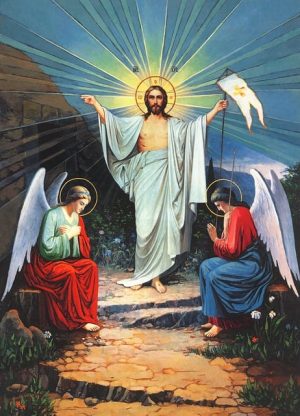
The Bible is very emphatic that Jesus Christ was raised from the dead by God, His Father – “we have testified of God that He raised up Christ” (1 Cor. 15:15). It is asserted that our faith is vain if Christ was not raised from the dead – “And if Christ be not risen, then is our preaching vain, and your faith is also vain.” (1 Cor. 15:14). But the question arises, why is the resurrection of Christ so important?
The following verses tell us:
“And if Christ be not raised, your faith is vain; ye are yet in your sins. Then they also which are fallen asleep in Christ are perished.” (1 Cor. 15:17, 18).
These words blow away a myth that is very popular in Christianity, but which is based on a misunderstanding of the Bible. The myth is that the death of Christ cancels all our sins. But we are told here that “if Christ be not raised . . . ye are yet in your sins. Then they which are fallen asleep in Christ are perished”. The death of Christ by itself is not enough to save us. The notion that God required the death of the sinner and accepted the death of Christ in place of the sinner is false.
The Bible further tells us why the resurrection of Christ is so important – “Wherefore he is able also to save them to the uttermost that come unto God by him, seeing he ever liveth to make intercession for them.” (Heb. 7:25). Jesus must be alive to make intercession for us who seek to come to God – “For Christ is not entered into the holy places made with hands, which are the figures of the true; but into heaven itself, now to appear in the presence of God for us” (Heb. 9:24). The holy places made with hands, which are figures of the true refer to the earthly tabernacle that Moses built in the wilderness.
Earthly tabernacle an object lesson
The services of the ancient tabernacle were shadows or object lessons of what Christ does in the plan of salvation to obtain pardon for our sins. It is said of the earthly priests that they “serve unto the example and shadow of heavenly things, as Moses was admonished of God when he was about to make the tabernacle” (Heb. 8:3-5).
In the earthly tabernacle, sins were not removed just by the offering of a sacrifice. The sacrifice provided the basis for the priest to minister on the sinner’s behalf. It was by the ministry of the priest that sins were forgiven. In every case, whether of the whole congregation, a ruler or any of the common people, their sins were forgiven only after the priest makes an atonement for them using the blood of the sacrifice.
In the case of a sin committed through ignorance, by the whole congregation, a young bullock was offered – “and the priest shall make an atonement for them, and it shall be forgiven them.” (Lev. 4:20). In the case of a ruler, the offering was a kid of the goats – “and the priest shall make an atonement for him as concerning his sin, and it shall be forgiven him.” (Lev. 4:26). The common people, likewise, offered a kid of the goats – “and the priest shall make an atonement for him, and it shall be forgiven him.” (Lev. 4:31).
Only sins of ignorance were atoned for; presumptuous sins were not atoned for – “And the priest shall make an atonement for the soul that sinneth ignorantly, when he sinneth by ignorance before the Lord, to make an atonement for him; and it shall be forgiven him.” (Num. 15:28). “But the soul that doeth ought presumptuously, whether he be born in the land, or a stranger, the same reproacheth the Lord; and that soul shall be cut off from among his people. Because he hath despised the word of the Lord, and hath broken his commandment, that soul shall utterly be cut off; his iniquity shall be upon him.” (Num. 15:30, 31).
Sins of ignorance, as reckoned by Jesus, could potentially include the most heinous misdeeds such as even the sin of those who crucified him; He prayed for those who crucified Him, saying, “Father, forgive them; for they know not what they do.” (Luke 23:34). Peter said the same: “I wot that through ignorance ye did it, as did also your rulers.” (Acts 3:17). Jesus recognizes human weakness and is willing to treat every possible sin as ignorance, if we repent of it, because he knows that we are susceptible to be manipulated by the Devil – “If we confess our sins, he is faithful and just to forgive us our sins, and to cleanse us from all unrighteousness.” (1 John 1:9).
Sins that are not repented of and confessed are not atoned for. Far from being cancelled by the death of Christ, they remain on the heads of those who committed them and are paid for by the sinner in the lake of fire – “Then shall he say also unto them on the left hand, Depart from me, ye cursed, into everlasting fire, prepared for the devil and his angels” (Matt. 25:41).
But what happens to those sins that were confessed? Does Jesus pay the penalty for those on our behalf and dies eternally like the unrepentant sinner? No! In fact, He is alive right now and will remain alive forevermore (Rev. 1:18). In the object lesson of the ancient sanctuary ministration, the process of the final removal of sins from among the saints is illustrated.
Day of Atonement and final removal of sins
Once every year, on the Day of Atonement, all the confessed sins were placed on the head of the Scapegoat, which was then led out of the camp – “And Aaron shall lay both his hands upon the head of the live goat, and confess over him all the iniquities of the children of Israel, and all their transgressions in all their sins, putting them upon the head of the goat, and shall send him away by the hand of a fit man into the wilderness: And the goat shall bear upon him all their iniquities unto a land not inhabited: and he shall let go the goat in the wilderness.” (Lev. 16:21, 22).
The Scapegoat’s blood was not shed on behalf of the sinners, but all the confessed sins were placed on his head, and he is removed from the camp forever, never to return. The Scapegoat represents Satan, who would have caused all the sins of the repentant sinners to have been committed. While interceding for us as repentant sinners, Christ would have “borne our griefs, and carried our sorrows” (Isa. 56:4). It was in the process of taking unto Himself our sin problem, that Christ was crucified by wicked hands (Acts 2:23). He was not bearing punishment from God that was intended for us. By His death He has exposed Satan as a murderer and the real culprit behind the sins that he would have caused God’s children to commit (Heb. 2:14).
In interceding for us, Christ points to our repentance as evidence that we are not genuinely seeking to join Satan in his rebellion against God. He further points to Satan as the real culprit who should pay the penalty for the sins that he would have caused us, the repentant sinners, to commit. Thus, the repentant sinners are acquitted of the charges associated with those sins. Christ further intercedes for us to be given the Holy Spirit that we might be empowered to resist the Devil and live righteously without continuing to commit sins.
The final intercession on our behalf during the last days, as was typified by the Day of Atonement, is described as follows: “And another angel came and stood at the altar, having a golden censer; and there was given unto him much incense, that he should offer it with the prayers of all saints upon the golden altar which was before the throne. And the smoke of the incense, which came with the prayers of the saints, ascended up before God out of the angel’s hand. And the angel took the censer, and filled it with fire of the altar, and cast it into the earth: and there were voices, and thunderings, and lightnings, and an earthquake.” (Rev. 8:3-5).
The censor being cast out of heaven signals that this is the final intercession, after which, it will be declared, “He that is unjust, let him be unjust still: and he which is filthy, let him be filthy still: and he that is righteous, let him be righteous still: and he that is holy, let him be holy still. And, behold, I come quickly; and my reward is with me, to give every man according as his work shall be.” (Rev. 22:11, 12).
Let us repent of our sins before it is too late and accept the gift of the Holy Spirit who empowers us to live above sin – “Then will I sprinkle clean water upon you, and ye shall be clean: from all your filthiness, and from all your idols, will I cleanse you. A new heart also will I give you, and a new spirit will I put within you: and I will take away the stony heart out of your flesh, and I will give you an heart of flesh. And I will put my spirit within you, and cause you to walk in my statutes, and ye shall keep my judgments, and do them.” (Eze. 36:25-27).
It has been shown that the unrepentant sinner will pay the penalty for his own sin in the lake of fire. The sins of the repentant sinner will be placed on Satan, who will pay the penalty for those, having caused them to be committed. Where then, did the idea come from that Christ paid the penalty for all sins? This widespread misunderstanding arises from the fact that God did deliver His Son into the hand of Satan in place of Adam, because Adam obeyed Satan and gave Satan some claim over him before Adam’s children were born. In this sense, Christ was turned over as a ransom for humanity due to Adam’s sin. This transaction effectively cancels any claim that Satan might have on us because of Adam’s sin. But it does not cancel our personal sins which we must account for and repent of to obtain forgiveness for them.
We should not be drawn into a pagan philosophy that portrays God as an unforgiving and exacting person who insists that someone must be punished for even the confessed sins and ultimately inflicting the punishment on His own Son. Further, we should not deceive ourselves into thinking that all our sins are already cancelled by the death of Christ, so that it would not even matter that we continue sinning. May the Lord help us to repent of our sins and be saved before it is too late.
“He that hath ears to hear, let him hear” (Matt. 11:15).
For further information, please visit Patience of the Saints at http://thecommandmentsofgodandthefaithofjesus.com/
Questions and comments may be sent by e-mail to: commandmentsofgodandfaithofjesus@yahoo.com